| March 2026 circular: Report from Napak, and plans for an Acheru charity run in Uganda |
| Charity run |
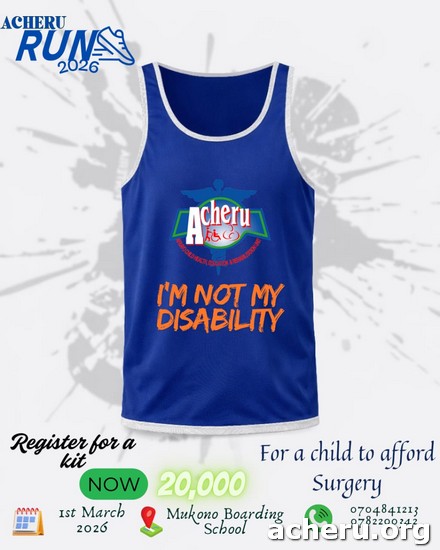
| By the time you read this another charity run should have taken place to raise money for Acheru. I am delighted to see the efforts being made there to generate support for Acheru, but perhaps more important than the money raised is the promotion of the work with many more people being made aware of what we do. |
| Support is being sought not just from individuals but from partners and other organisations, and the profits from sale of T shirts is another valuable source of income. The support raised and the numbers involved are, I believe, indicative of a change in attitudes to disability and I think our Acheru work has played a significant role in this. We were really struggling with attitudes to disability, children hidden away and denied any form of treatment because the child may have been seen as cursed or simply of no value. The problem certainly hasn't gone away, but there has been considerable progress. |

|
|
| Napak |
| Still a long way to go with work at Napak (which means 'beautiful place), but good progress has been made with children already benefitting through the visits made by Acheru staff and the links with our partners. I can understand why Napak was chosen as a base and am happy that although we no longer have staff based at Minakulu, the work done and relationships developed mean children continue to benefit and can be referred to Acheru if necessary. |
| Our unit at Minakulu was close to government and church run health centres, and we worked closely with them in the knowledge that we would eventually be moving on from there. |
|
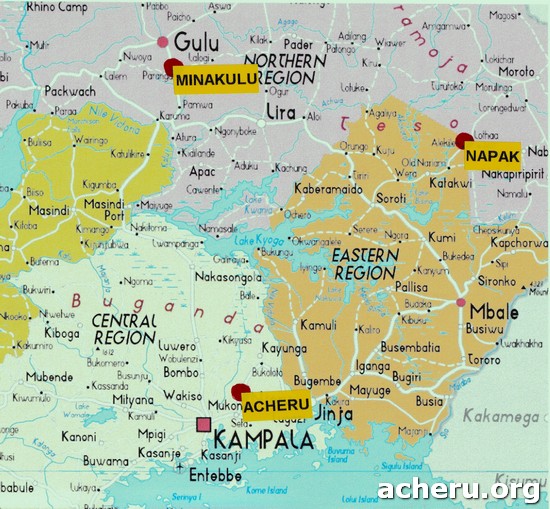
| Minakulu was on the edge of a very large area where nothing like our work had been done. It was also on a main route to Gulu, so there were transport links which can still be used to send children to Acheru. Napak is similar in that it gives us access to a very large area of Karamoja. Napak town is growing, with a population of over five thousand, and the latest census shows the population of Napak district at over 210,000 so there's plenty of scope for our work and local government are very keen to have us. |
| The town of Napak is 340 kilometers from Kampala, on the road from Soroti to Moroto with transport links available for sending children to Acheru. We still have a lot to learn about the area but a very good start has been made with the partnerships formed there - church, education, welfare. They can help us locate children and also make available, for example, school classrooms for holding clinics. |
| The Karamajong people are mainly pastoralists and lived a nomadic lifestyle, though perhaps more are settling now as seen in the growth of the Napak population. With the work of Acheru there has always been the issue of convincing families to bring their children to us or hand them over for treatment, hence the centrality of community work. and the importance of being able to show them children who have already been successfully treated. I knew a previous bishop of Karamoja who, in the context of developing Christian work there, told me how the people took their lead from a chief or head man - if, for example, they converted to Christianity, then many others would follow. It may be that this is a path we can follow too, and I am optimistic about the potential. |
| I must be realistic too, we are a very small organization and will have one permanent worker based there (with others on rotation) so we can't on our own deal with big numbers but every child treated is a life changed and we have often seen how our example can influence others so I believe setting up work there should be very worthwhile. The primary aim to start with is to find the children who need us, and to develop the community and maternity services connections which might enable us to look at how such a high incidence of cerebral palsy can be addressed. |
|
|
|
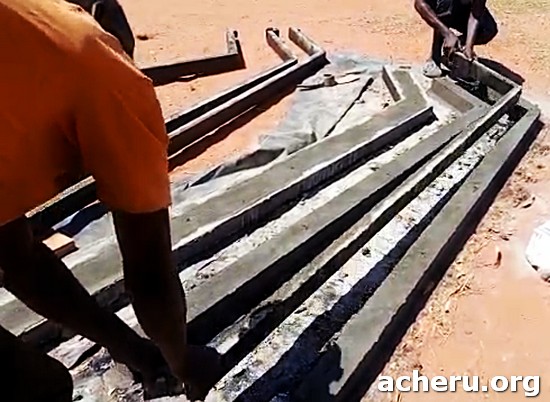
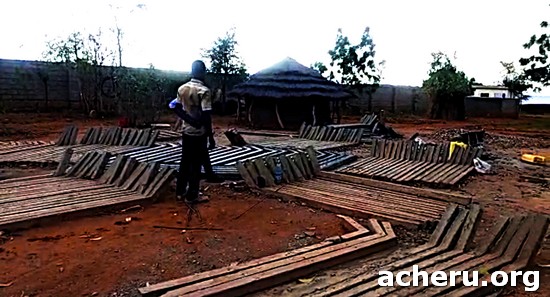
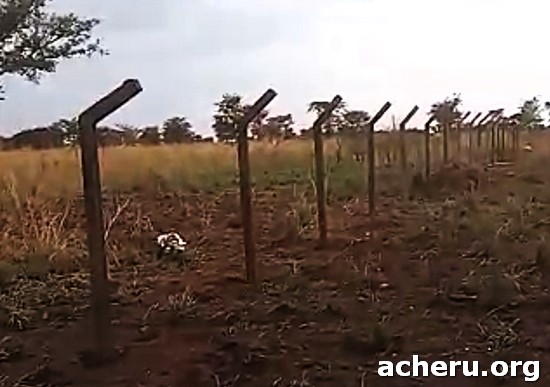
| Making and installing reinforced concrete fence posts on our Napak boundary |
| A trip to Karamoja Napak |
| While we have seen a significant shift in attitudes to disability in some areas, notably around Mukono and other areas where Acheru has been active, we now face the old attitudes as we start work at Napak, and I have been upset, but not particularly surprised, by the reports of the first community visits there: |
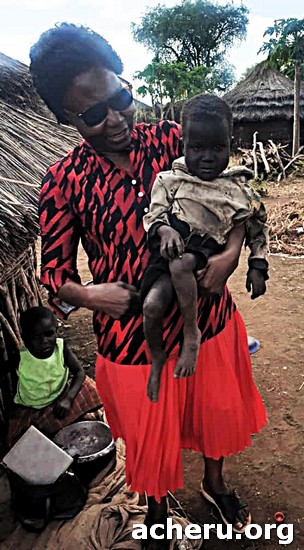
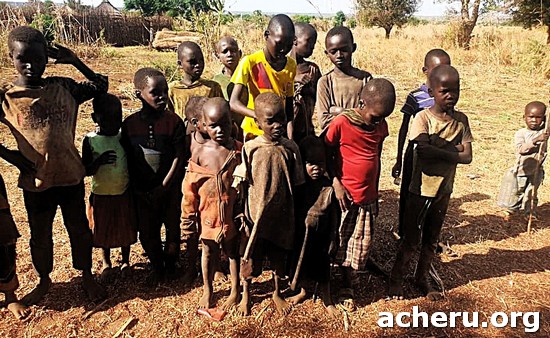
| Rose writes: "Life in Karamoja is so hard. Different villages and homes with disabled children were visited and we found families living in hardship. |
| It is so sad people around this place spend days without having food including children. These people walk miles and miles to find water. In all the communities which were visited all the children were very hungry there was no hope of having the next meal. The climate makes it difficult to grow crops. Parents said that there is no plan for eating in a home on a daily basis and they eat when they get food. Children spend their day moving around from place to place looking for something to eat. |
| The situation is so bad when it comes to children with disabilities. They cry with hunger, parents say it's not because they want their children to suffer but they don't have anything to feed them. Men of these villages are not hardworking, they spend most of their time in small trading centers taking alcohol and leave all the burden of taking care of the family to their wives. |
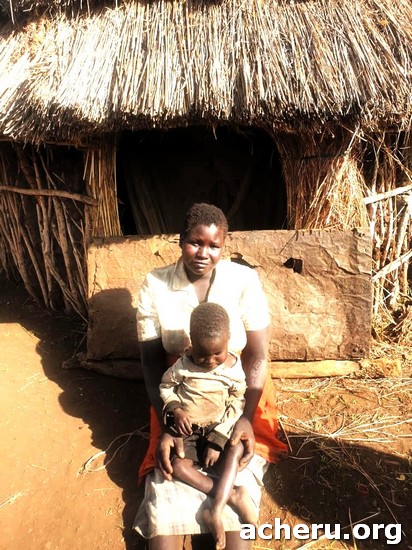
| Mothers feel the pain of not being able to give necessities to their children when it comes to education, feeding and health care because they are not working to earn money. They say that public hospitals and schools are very far. So their children end up not going to school or have proper medical care when they are sick. These people are sleeping in small huts with no doors, they don't have mattresses and bed covers. |
| The team met with mama Philly a lady with a cerebral palsy child, she stays in a very bad house with no door and the husband abandoned her for other women. She has many children who are not attending school because she can't afford. A lot is needed to be done to help people of Karamoja". |
|
|
|
|
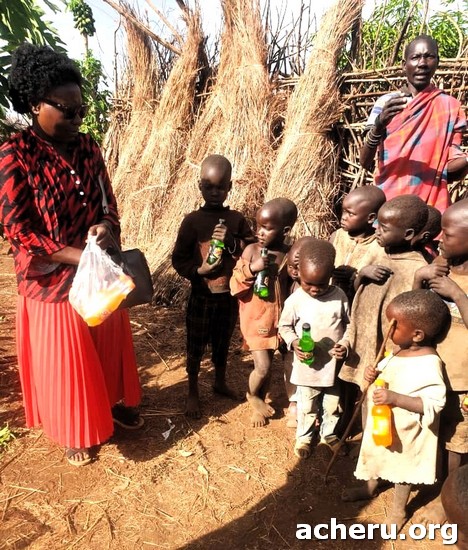
| The visit was distressing for the staff who took part, and they gave the children their own food and drinks. In one family Harriet found a malnourished child who had been given food, and this was feeding the whole family. It's going to be difficult visiting a disabled child when the rest of the family are hungry. If one child is helped, the siblings could turn on them, possibly even killing them. Our staff are looking for partners who can help with welfare, letting us concentrate on disability. |
Traditionally the Karamajong kept cattle, but now it seems most of the cattle are owned by a very small number of men, providing very limited opportunities for employment. We don't understand why they seem to be ineffective farmers, as what we planted on our own land has grown successfully despite the harsh climate.
|
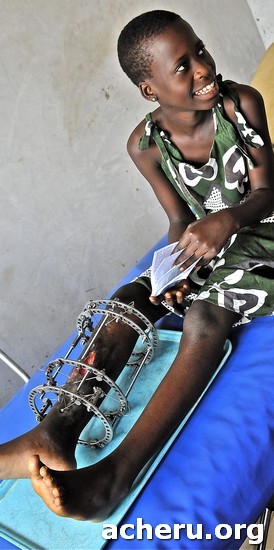
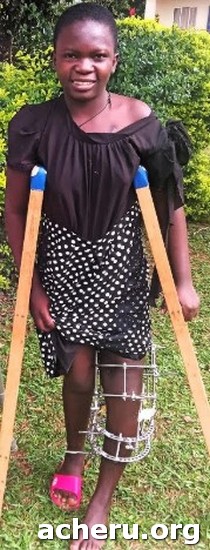
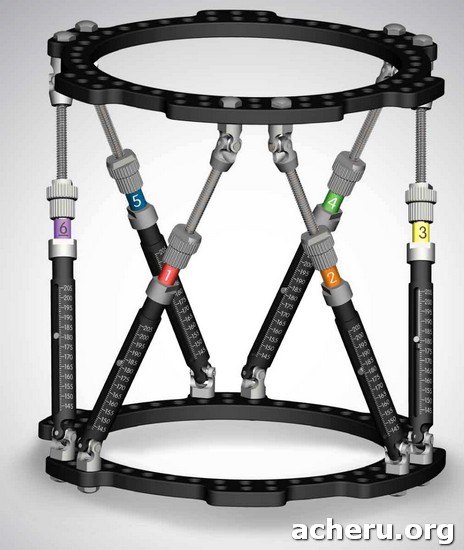
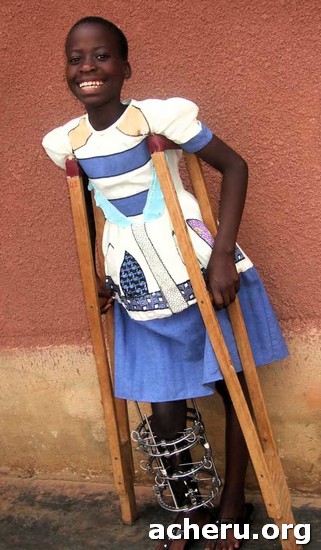
| Several of you have spoken to me after seeing a feature on the BBC news about a young boy who had his leg lengthened by one inch. Please bear in mind that there's nothing new in lengthening a bone, what was featured was a new (much more costly!) method of doing what Acheru, in conjunction with our partner CoRSU, has been doing from the very start of our work in Uganda. The technique featured uses an adjustable rod placed inside the bone (the adjustment carried out using magnets) whereas in Uganda we use an external Illizarov frame with pins through the bone. The result is the same, the bone can be extended by 1mm every day. I don't yet know much about the new technique, but I don't think it would be an option for many of the cases we have to deal with where much more than straightforward extension is required - perhaps alignment or rotation of a deformed or damaged bone. |
| It's worth reflecting on the number of children treated using old NHS frames we have sent to Uganda and other countries. We get them without the pins which go through the bone, but bicycle spokes seem to work perfectly well. It's a precision procedure, sometimes in the case of Taylor Spatial Frame fixators using a computer programme to determine the precise daily adjustments for extension, alignment, and rotation. Even when a section of bone is missing, the frame holds the limb in position for bone growth to take place. This has been particularly valuable with osteomyelitis patients where there has been significant bone damage or loss and has enabled us to save many limbs which would otherwise have been amputated. |
|
|
| Illizarov frames |
|
| Taylor Spatial Frame |
|
| Illizarov frames |
 
|
Return
to full Acheru website
|
|